Space 1999 Coaster
| 
| 
| 
| 
| 
| 
| 
| 
| 
| 
| 
| 
| 
| 
| 
| 
| 
| 
| 
| 
| 
| 
| 
| 
| 
| 
| 
| 
| 
| 
| 
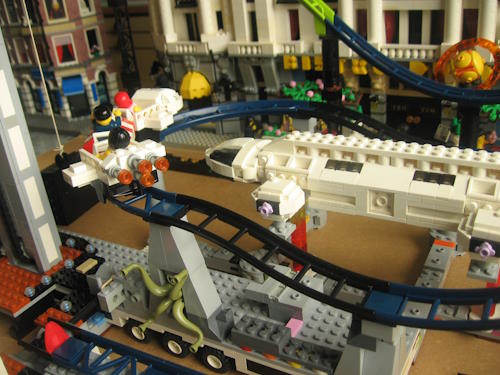
| 
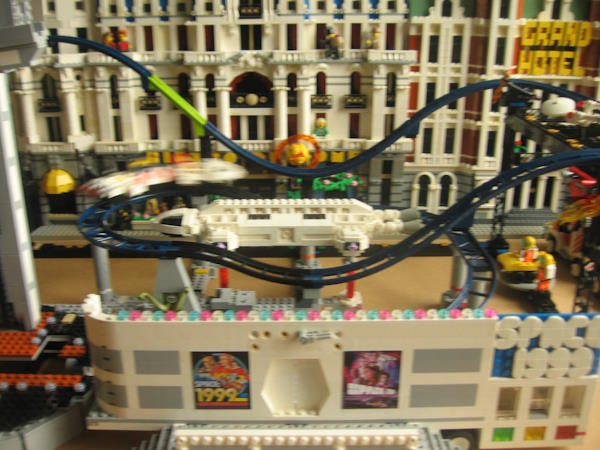
| 
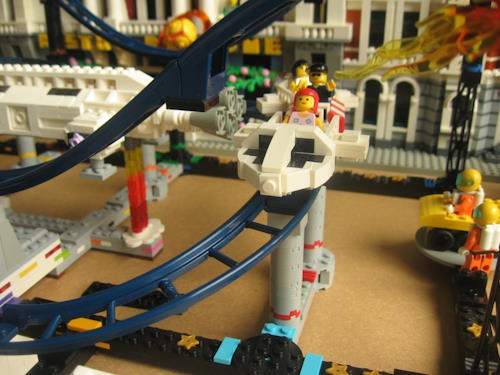
| 
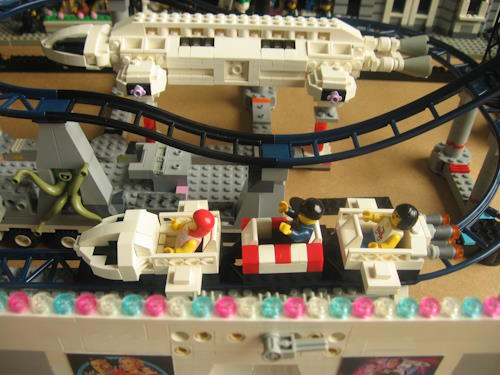
| 
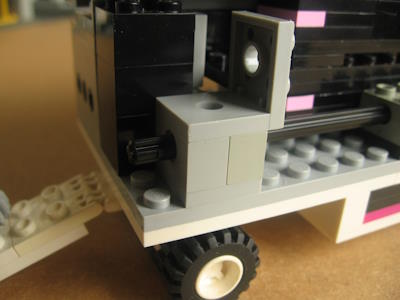
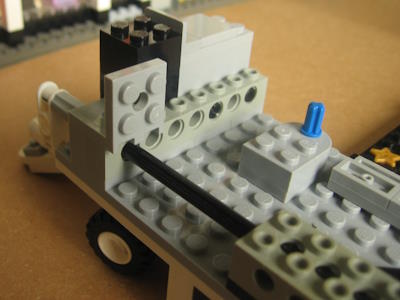
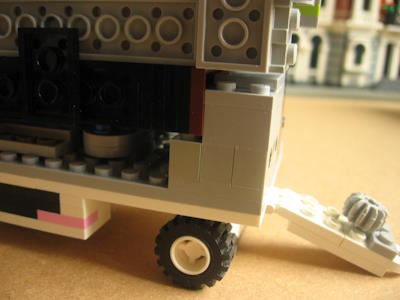
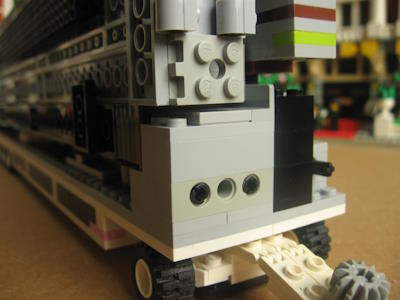
Here are some improvements that I made after the first photo shooting session:
The bearing of the crank kept getting loose while cranking so I made it more robust.
| 
| 
| 
| 
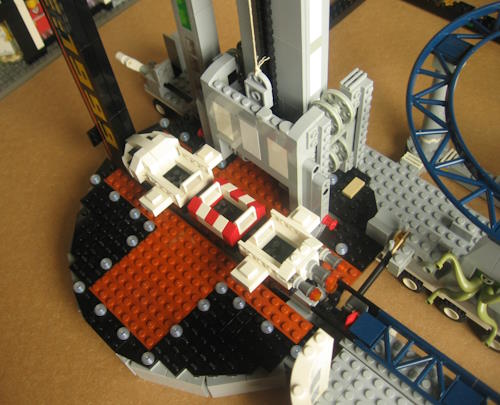
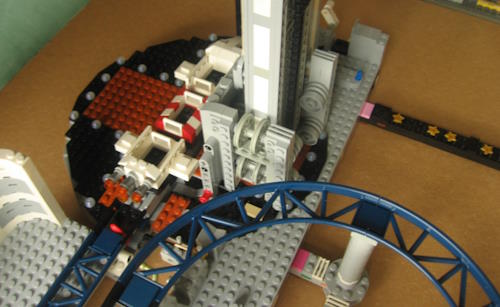
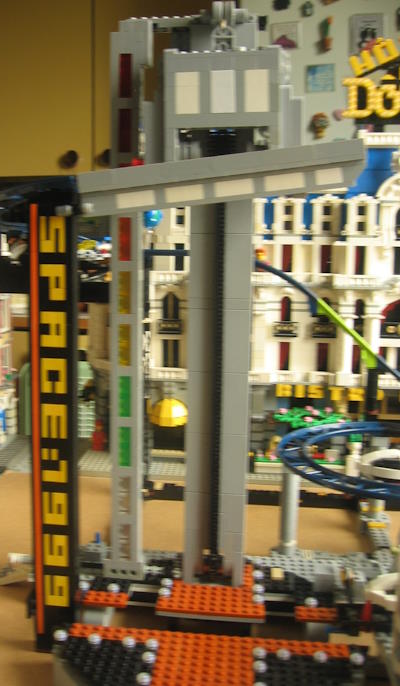
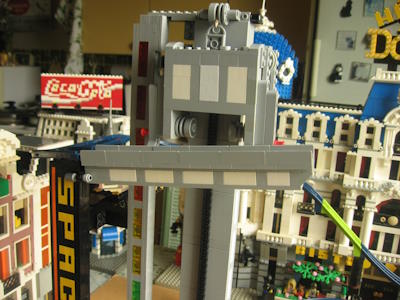
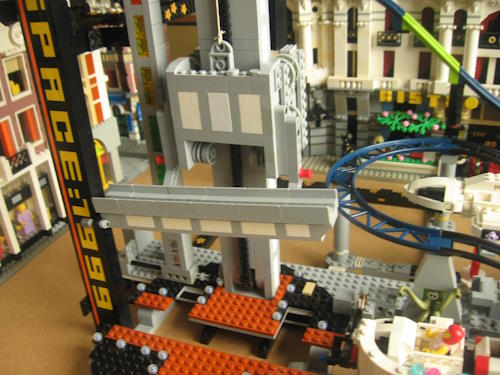
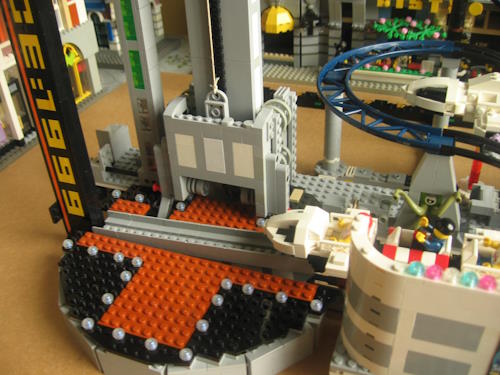
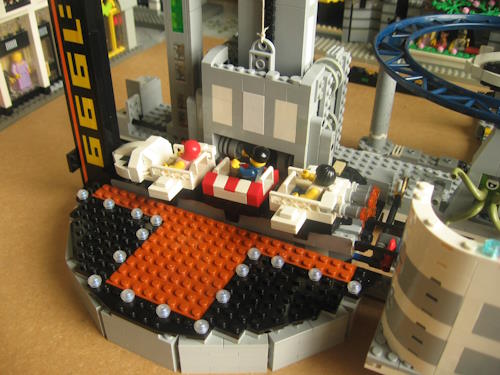
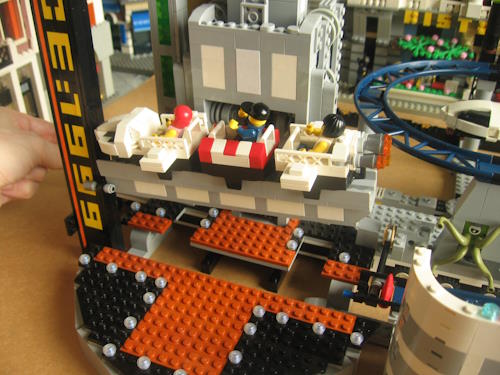
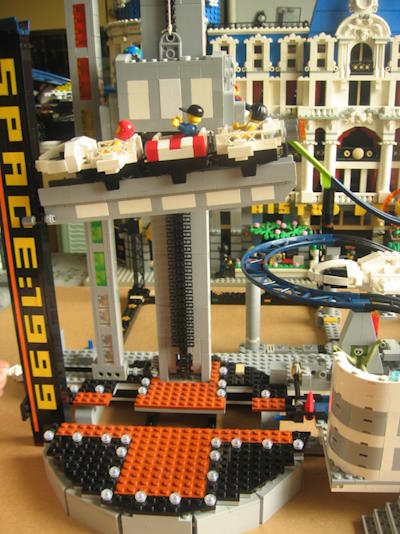
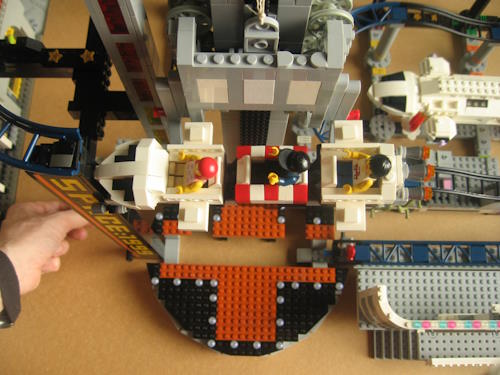
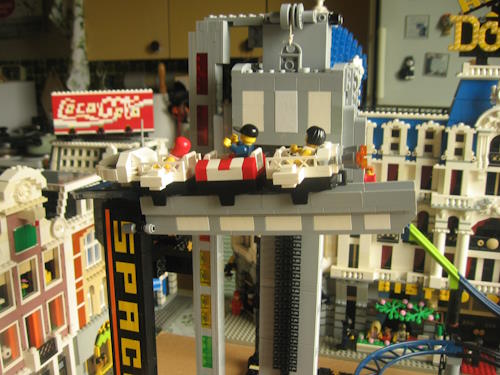
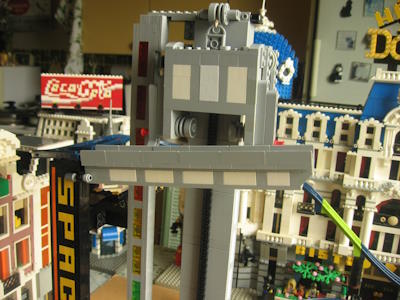
The elevator was the most challenging part of this build.
Why did I use elevator instead of a lifthill? There were two reasons.
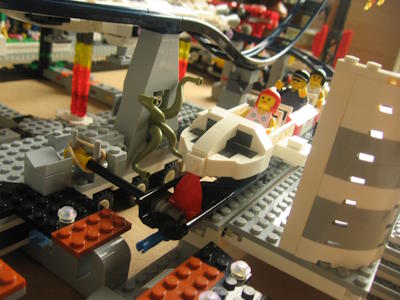
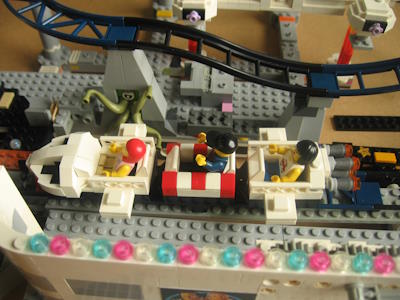
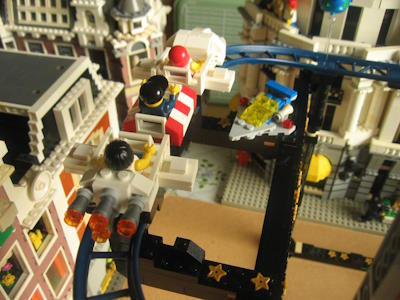
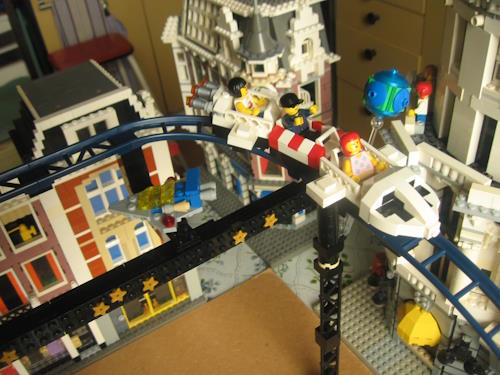
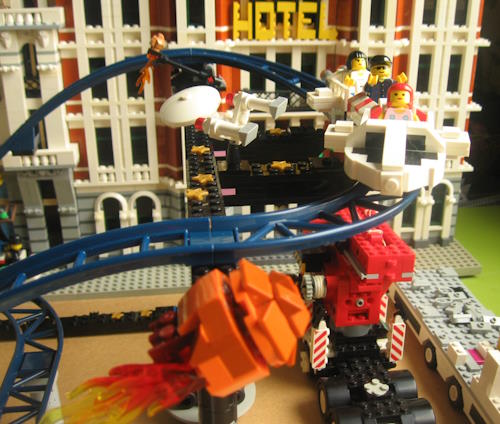
I wanted the train to be like an Eagle spaceship from the TV-series.
That ment heavier train. I've noticed that the heavier the train is the
more the chain of a lifthill slips. The second reason was that I wanted
the train rise vertically because the Eagles are VTOLs (Vertical
Take-Off and Landing).
The space for the elevating part of track is 24 studs long. The elevating
part is one stud shorter (23 studs) to prevent it to stuck. That is why
it is made out of panels instead of track pieces. The missing one stud of
the track is too much for the train wheels. It's devided in half so that
on both ends of the elevator there is a ½ stud gap. The train can jump over
that kind of gap with speed but not if it moves slowly and in the elevator it's
moving slowly both getting in and out.
| 
This is how I solved the problem with getting out of the elevator.
The problem was that when the front wheels dropped to the gap the heavy
"cockpit" in the front of the train made the first car nod down. That
caused the second wheels to go up. At the same time the little lumps that
prevent the wheels to rise off the track went up, too. That happens because
the panel walls are straight. Then the front wheels jump over the gap but
the second wheels are still in the air and the lumps are higher than they
should be and then the lumps won't go under the track but they hit the
front end of the track and the train stops.
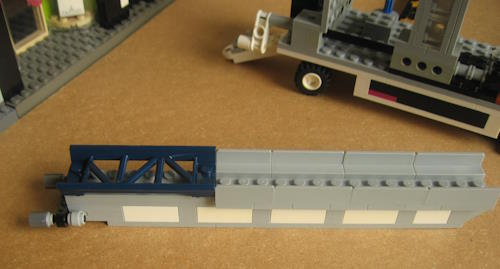
So I put a short piece of a track on the elevator. Now when the front wheels
fall to the gap, the lumps are under that short track piece and prevent the
car to nod. That way the lumps stay all the time under the track and the
train can overcome the gap and the journey continues.
| 
The short track piece in the elevator caused a new problem. The track
on the elevator was now a bit too high comparing to the solid track.
The black stopper of the elevator was difficult to move one plate lower.
| 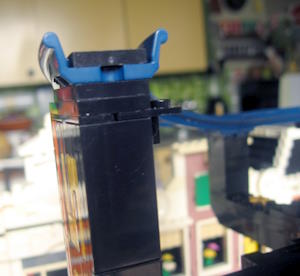
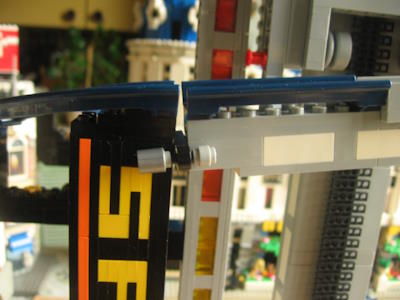
So, I moved the little rollers, that will hit the stopper, one plate
higher. Now the tracks are on the same level.
| 
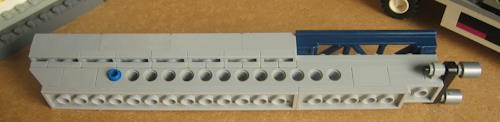
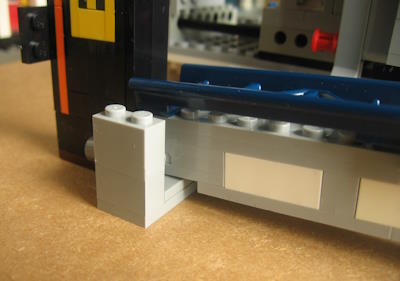
But the other end of the elevator, where the train enters, was one plate
too high now. I took off a part of the highth of one plate from the bottom of
the elevator under the rollers so that the elevator can drop one plate lower
in the lowest position.
| 
This way.
| 
Now the levels on the other end match, too.
| 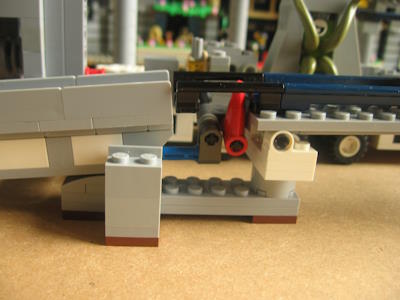
As you may have noticed, the gaps on both ends of the elevator are less
than ½ studs. That is because I have moved one ½ stud gap here where the train
moves faster and can easily jump over this gap.
| 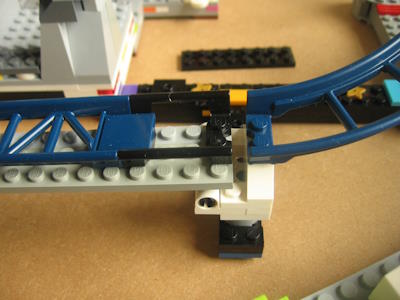
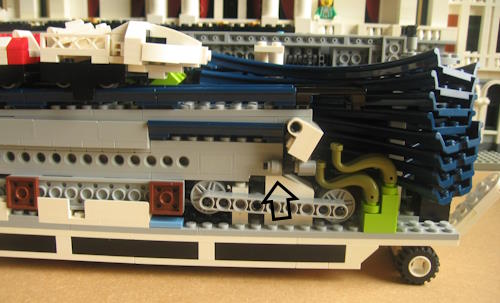
And because the bottom of the elevator changed I had to change its stand on
the trailer, too.
| 
NEXT
|